
Hydralife Results: Naural Bioremediation of Water, Natural Biostimulation of Soil and No Nuisance Surface Algae for the First Time

The Ravenna Golf Course, www.ravennagolf.com, in Littleton, Colorado is a course and a community continuously seeking better ways of managing their ecosystems and quality of life for their residents and guests. They only employ highly skilled leaders and talented team members to seek and obtain better results in each of their crafts year after year. Ravenna's greens are fast and fun and their community is beautiful nesteled in the foothills of the Rocky Mountains.
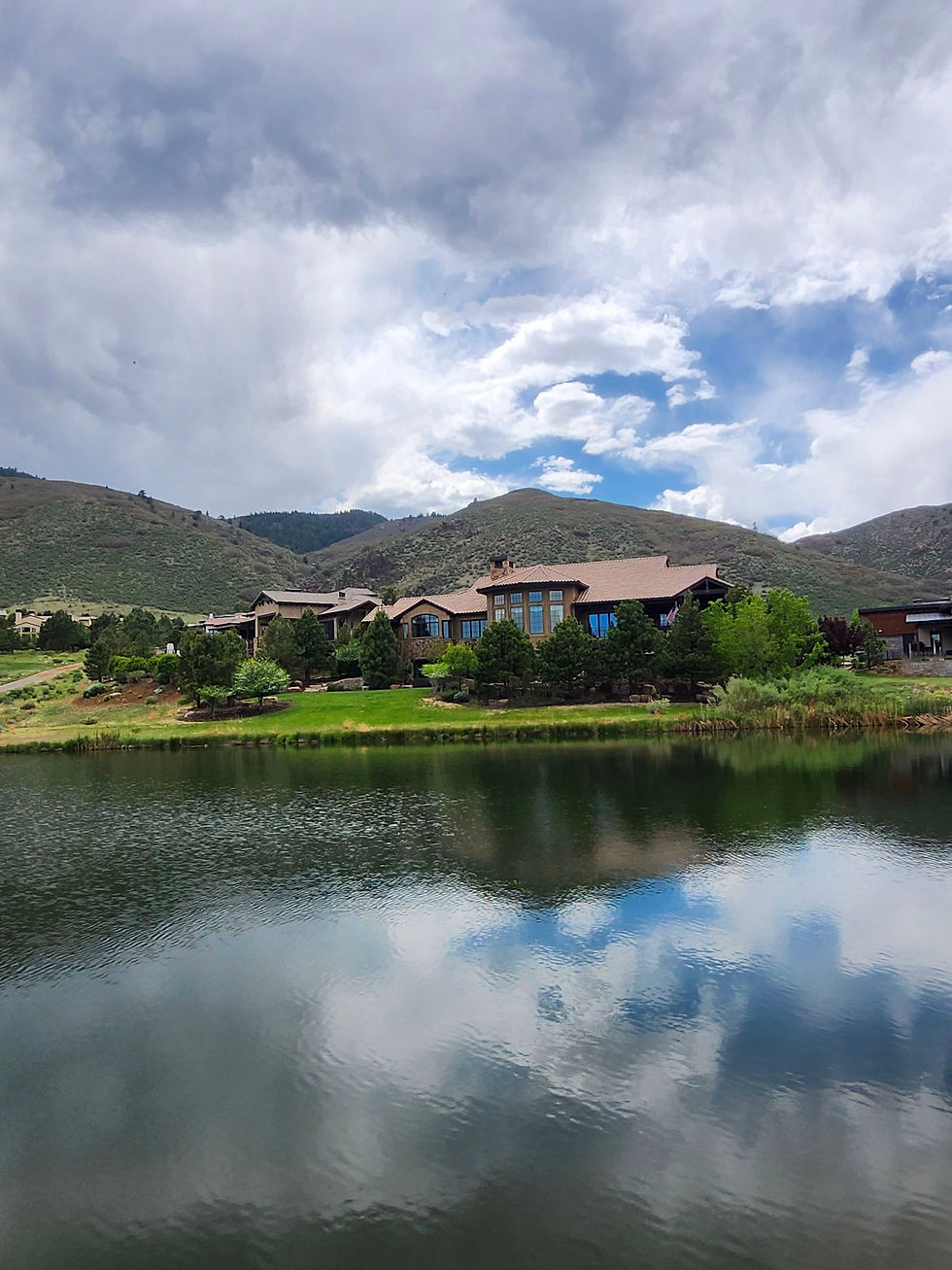
The Starting Conditions: The Need For Natural Bioremediation and Natural Biostimulation
Ravenna's turf irrigation pond is refilled nightly by the Castle Rock Reservoir and the Castle Rock wastewater treatment facility, an intertwined system that delivers a high-nutrient reclaimed water source. This is exactly the kind of water where harmful algae usually thrives, and exactly the conditions Hydralife seeks. Conditions that are not optimal for other companies but where natural beneficial phytoplankton does its best work.
At the start of treatment the pond read 1 to 2 ppm ammonia and 0.5 ppm phosphate, with nitrite and nitrate at zero. During the treatment window the course irrigated roughly 380,000 gallons each night, so the pond was constantly drawing down and refilling with fresh nutrient-bearing water.
The Irrigation Pond Story and the Results
Ravenna partnered with Hydralife to administer a natural solutions, beneficial freshwater phytoplankton, to reduce the nutrient levels in thier irrigation pond and help promote the health of their turf by irrigating these beneficial phytoplankton as a excellent biostimulant into their turf. This is know as natural bioremediation and natural biostimulation
Nine days after a single 100-gallon dose of beneficial phytoplankton on June 10, 2026, the pond's nutrients had fallen to minimum detection and the pond was in excellent condition, balanced and alive.
Ammonia dropped from 1 ppm down to 0.25 ppm. Phosphate fell from 0.5 ppm to 0.25 ppm. Nitrite and nitrate held at zero. No nuisance algae had developed like previous years and the potential for a toxic algae bloom or cyanobacteria was neutralized.
The Director of Agronomy noted that for the first time in his six years managing the property, the pond carried no filamentous surface algae, while his three untreated ponds still did. He also observed a daphnia bloom develop along the entire shoreline, the visible signature of a healthy food chain feeding on the phytoplankton. A zooplankton bloom of this size was something neither the Director or Hydralife had witnessed before.
The Director of Agronomy for Ravenna Golf Course and his team take a proactive approach toward keeping their course in prestine condition both in the present and future state. For example, he had already implemented the use of biochar in an innovative manner throughout his ponds and had significant results with them. He and his team are experimental and work to discover the best practices for his course.
As much as Hydralie wishes we were, Hydralife is an aquaculture company and not a marketing company. Yet when Ravenna's Director of Agronomy came accross an email we delivered he recognized it would be worth his time to hold a short conversation. To this date he is still one of the few who has responded to our email campaign and as a result Hydralife ensurses he receives the highest level of customer support and product results possible at a price that works with his organization's budget.
Before and After (ppm)
Ammonia (NH4): 1 to 2 ppm before, 0.25 ppm after.
Nitrite (NO2): 0 ppm before, 0 ppm after.
Nitrate (NO3): 0 ppm before, 0 ppm after.
Phosphate (PO4): 0.5 ppm before, 0.25 ppm after.
Readings taken June 10, 2026 (before) and June 19, 2026 (after), nine days post-dose.
What Drove the Result
Performance climbed sharply once water temperature rose above 60 degrees and the pond received days of sunlight. Warm, sunlit, nutrient-rich water is ideal growing conditions for the phytoplankton, which let it outpace the incoming nutrient load even as the pond refilled every night.
How Hydralife Works
Hydralife works by competitive exclusion. We seed a body of water with beneficial phytoplankton that consume the same dissolved nitrogen and phosphorus that nuisance algae, harmful algae and cyanobacteria need to bloom. When the phytoplankton establish themselves, there is nothing left for toxic algae to grow on. This is a natural and chemical free method that does not utilize copper, peroxide, or a kill-and-decay cycle. What replaces the bloom is a living food chain: single celled phytoplankton at the base, zooplankton above them, fish fry and then healthy food chains and improved water quality as a result.
The cherry on top is that Ravenna Golf Course is now irrigating its turf with single celled phytoplankton every irrigation cycle. Phytoplankton is one of the best biostimulants for soil, therefore they are improving the quality of their turf, soils and biome of the soil while improving the longevity of their lands. This works in all irrigation applications including agriculture and ranching.
If you manage an irrigation pond, a park lake, or a private pond, especially one fed by reclaimed or nutrient-rich water, a single dose can change the season. Reach out at service@hydralifesolutions.com or 303.219.0623, or visit hydralife.org.
Also, go play and enjoy a round of golf at Ravenna. It is an amazing course and community. www.ravennagolf.com


Comments