
Selenastrum: A Wonderful Phytoplankton for Aquatic Ecosystems
- Dr. Algae

- Dec 26, 2025
- 4 min read
Green phytoplankton form the foundation of freshwater food webs, and among these microscopic organisms, Selenastrum is an excellent phytoplankton as both a nutritional dynamo for zooplankton and a natural water purifier. This clustering crescent-shaped green microalgae plays a dual role in aquatic environments. It provides essential nutrients to zooplankton while actively removing excess nitrogen and phosphorus from water bodies.
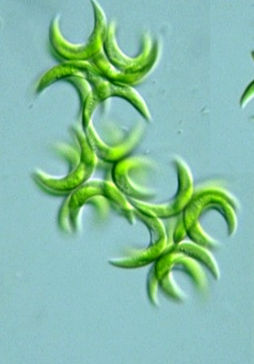
Selenastrum for Nutrient Uptake:
Beyond its role as food, Selenastrum excels at removing excess nutrients from water, making it valuable for natural water treatment and competion against harmful algae blooms (HABs).
Nitrogen Consumption
Selenastrum demonstrates remarkable efficiency in nitrogen uptake across multiple forms:
Ammonia (NH₃/NH₄⁺): This is often the preferred nitrogen source for Selenastrum and many of Hydralife Solutions's phytoplanktons. Under optimal conditions, cultures can remove 5-15 mg/L of ammonia-nitrogen per day. The uptake rate depends on light intensity, temperature, and ammonia concentration, with maximum uptake occurring at moderate concentrations (2-10 mg/L).
Nitrite (NO₂⁻): While less commonly studied, Selenastrum can utilize nitrite as a nitrogen source, though uptake rates are generally lower than for ammonia or nitrate. Typical removal rates range from 1-5 mg/L per day under favorable conditions.
Nitrate (NO₃): Selenastrum readily assimilates nitrate, with uptake rates often exceeding 10-20 mg/L per day in dense cultures. This form of nitrogen requires more metabolic energy to process than ammonia, but the microalgae efficiently converts it to organic nitrogen for protein synthesis.
The nitrogen uptake pattern typically follows the preference: ammonia > nitrate > nitrite, though Selenastrum can adapt its enzymatic machinery based on available nitrogen sources and Hydralife Solutions utilizes NO3 in our grows to help limnologists manage this nutrient more effectively.
Phosphorus Consumption
Phosphorus is essential for Selenastrum growth, needed for DNA, RNA, ATP, and phospholipid synthesis. The alga demonstrates efficient phosphorus uptake:
Orthophosphate (PO₄³⁻): Selenastrum can remove 1-5 mg/L of phosphate-phosphorus per day under optimal growth conditions. At low phosphorus concentrations, the alga exhibits luxury uptake, storing excess phosphorus as polyphosphate granules for future use.
Nitrogen-to-Phosphorus Ratios: Selenastrum typically maintains cellular N:P ratios between 10:1 and 20:1 by mass, though this can vary with environmental conditions. This means that for every gram of phosphorus removed, the alga simultaneously removes approximately 10-20 grams of nitrogen.
Selenastrum: Fueling the Food Web
Selenastrum species, particularly Selenastrum capricornutum (now reclassified as Raphidocelis subcapitata), are recognized as high-quality food sources for zooplankton. Their nutritional value stems from several key components:
Protein and Amino Acids: Selenastrum contains substantial protein content, typically ranging from 40-50% of dry weight, providing essential amino acids that zooplankton require for growth and reproduction. This protein-rich composition makes it comparable to other premium phytoplankton species used in aquaculture.
Lipids and Fatty Acids: While not as lipid-rich as some marine phytoplankton, Selenastrum produces polyunsaturated fatty acids (PUFAs) including omega-3 and omega-6 fatty acids. These compounds are crucial for zooplankton development, particularly for species like Daphnia, which cannot synthesize these fatty acids independently.
Vitamins and Minerals: This green alga synthesizes B-vitamins, vitamin E, and accumulates essential minerals including iron, zinc, and selenium. The presence of these micronutrients enhances its palatability and digestibility for filter-feeding zooplankton.
Cell Size and Digestibility: With cell dimensions typically between 8-14 micrometers, Selenastrum falls within the optimal size range for consumption by most freshwater zooplankton species. Its thin cell wall and lack of toxic secondary metabolites make it highly digestible.
Applications for Water Quality Management
The dual benefits of Selenastrum make it valuable for various applications:
Lake Management: Using phytoplankton to innoculate your lake particularly in the spring time helps good microalgae establish themselves and consume winter vegatative dieoff, nitrogen and phosphate sources prior to toxic or nuisance algae gaining dominance in the lake. It also promotes lake productivity but promoting healthy zooplankton and copepod populations.
Irrigation Ponds: Whether the irrigation pond is on a golf course or a farm, phytoplankton converts runoff fertilizers and excess nutrients into organic biomass that acts as a biostimulant for soils when irrigated back into the land. This provides natural nutrients and revitilization to soils increasing their productivity and lifecycle.
Agriculture Bioremediation: The alga's tolerance for elevated nutrient levels makes it suitable for treating agricultural runoff and other nutrient-polluted waters.
Eutrophication Control: Developing healthy populations of good phytoplankton oxegenates waters and feeds the microcosm, while making it challenging for unwanted algae to establish themselves.
Aquaculture Systems: Using Selenastrum as live feed for zooplankton while simultaneously treating culture water creates a circular economy within aquaculture facilities.
Wastewater Treatment: Algae ponds dominated by Selenastrum can provide tertiary treatment for municipal wastewater, removing residual nitrogen and phosphorus before discharge.
Conclusion
Selenastrum exemplifies the interconnected roles that phytoplankton play in freshwater ecosystems. As a nutritionally complete food source, it supports healthy zooplankton populations that form the basis of fish production. Simultaneously, its capacity to remove substantial quantities of nitrogen and phosphorus helps maintain water quality and prevent eutrophication. Understanding and harnessing these properties positions Selenastrum as a key organism for sustainable aquaculture, water treatment, and ecosystem restoration initiatives.
For water quality professionals and aquaculture practitioners, Selenastrum represents not just a single-purpose organism, but a multifunctional tool that bridges the gap between biological production and environmental stewardship.
At Hydralife Solutions, we recognize the critical role that organisms like Selenastrum play in maintaining healthy aquatic ecosystems. Through research and practical application, we work to harness nature's own solutions for water quality challenges.


Comments