
Phosphate Removal and Lake Production: The Highest-Uptake Species in Our Blend

Updated: Sep 2
Green algae are the unsung heroes of freshwater ecosystems, forming the foundation of aquatic food webs while simultaneously purifying water to inhibit the development of other nuisance or toxic algae. Among these microscopic marvels, our highest phosphate-uptake species stands out as a particularly valuable one that plays dual roles as both a nutritional resource for zooplankton and a natural water treatment agent.

Understanding Our Highest Phosphate-Uptake Species
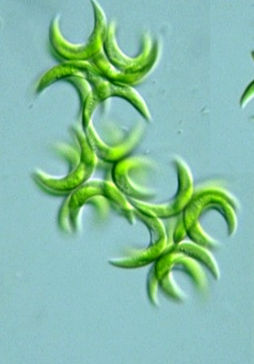
Our highest phosphate-uptake species is a freshwater green alga selected for how aggressively it draws dissolved nutrients out of the water column. Of everything in the Hydralife blend, it is the strongest phosphate scavenger, and it holds that performance across a wide range of pond and lake conditions rather than only in ideal ones. The cells stay suspended in the sunlit upper water column, where light drives photosynthesis, which keeps them productive and keeps them available to the grazers that feed on them.
This species thrives in nutrient-rich freshwater environments, including lakes, ponds, reservoirs, and slow-moving streams. Its ability to flourish in various conditions makes it a common and ecologically significant component of freshwater communities worldwide.
Nutrient Consumption: Our Highest Phosphate-Uptake Species as a Water Purifier
One of the most remarkable attributes of this species is its capacity to absorb and assimilate nutrients from the water column. This characteristic makes it valuable not only ecologically but also for water quality management and bioremediation applications. Essentially you can use it and other phytoplanktons in the Hydralife portfolio to compete with unwanted algae and cyanobacteria. In practice, that means using beneficial algae to starve unwanted algae of the nutrients they depend on.
Nitrogen Uptake
Our highest phosphate-uptake species demonstrates impressive nitrogen consumption capabilities, utilizing multiple forms of this essential nutrient:
Ammonia (NH₃/NH₄⁺): This species shows a preference for ammonia as a nitrogen source when available, as it requires the least energy to assimilate. Uptake rates can range from 0.5 to 5 mg NH₄⁺-N per gram of algae per hour under optimal conditions, though rates vary with light intensity, temperature, and algal density.
Nitrite (NO₂⁻): While less preferred than ammonia, this species readily consumes nitrite, effectively removing this intermediate nitrogen form from the water. This is particularly beneficial in closed system aquaculture systems where nitrite accumulation can be toxic to fish.
Nitrate (NO₃⁻): Though requiring more metabolic energy to convert to usable forms, nitrate serves as an excellent nitrogen source for these cells. Uptake rates typically range from 0.3 to 3 mg NO₃⁻-N per gram of algae per hour, making this species effective at reducing nitrate levels in agricultural runoff or wastewater.
The total nitrogen removal capacity of these cultures can reach 20-40% of their biomass weight during exponential growth phases, representing a significant water purification potential.
Phosphorus Uptake
Phosphorus, often the limiting nutrient in freshwater systems, is eagerly consumed by our highest phosphate-uptake species. This algae can uptake both inorganic phosphate (PO₄³⁻) and organic phosphorus compounds.
Phosphorus uptake rates typically range from 0.1 to 1 mg PO₄³⁻-P per gram of algae per hour under nutrient-sufficient conditions. During exponential growth, phosphorus can comprise 1-3% of the algae's dry weight. Importantly, this species can also store excess phosphorus in polyphosphate granules, a process called "luxury uptake," allowing it to remove phosphorus beyond its immediate growth requirements.
This phosphorus removal capability is particularly valuable because excess phosphorus is a primary driver of eutrophication and harmful algae blooms in freshwater bodies. By effectively sequestering phosphorus, these cells help maintain balanced aquatic ecosystems.
Nutritional Value for Zooplankton
As a primary producer, our highest phosphate-uptake species serves as a critical food source for various zooplankton species, including rotifers, cladocerans (water fleas), and copepods. The nutritional quality of this algae makes it particularly valuable in supporting healthy zooplankton populations.
Protein and Amino Acids
This species typically contains high protein levels, often comprising 40-50% of its dry weight. This protein is rich in essential amino acids that zooplankton cannot synthesize themselves, making the algae an excellent nutritional match for herbivorous and omnivorous zooplankton species.
Lipids and Fatty Acids
The lipid content of this species generally ranges from 10-20% of dry weight, though this can vary with environmental conditions and nutrient availability. Importantly, these cells produce polyunsaturated fatty acids (PUFAs), including omega-3 fatty acids that are essential for zooplankton growth, reproduction, and overall fitness. These fatty acids are transferred up the food chain, ultimately supporting fish populations and higher trophic levels.
Vitamins and Minerals
This species accumulates various vitamins, particularly B-complex vitamins and vitamin E, along with essential minerals such as calcium, magnesium, iron, and zinc. These micronutrients are vital for zooplankton metabolic processes, shell formation (in species like daphnids and copepods), and reproductive success.
Digestibility
The cell wall composition of this species makes it relatively digestible compared to some other algae species. While not as easily consumed as soft algae like Cryptomonas, most zooplankton species can effectively graze on these cells and assimilate their nutrients efficiently.
Ecological and Practical Applications
The dual benefits of our highest phosphate-uptake species (providing nutrition to zooplankton while removing excess nutrients) position it as a keystone organism in freshwater ecosystem health and a tool for sustainable water management.
Natural Ecosystem Balance
In natural settings, healthy populations of this species support robust zooplankton communities, which in turn feed larval and juvenile fish. This energy transfer sustains entire food webs while the algae simultaneously helps prevent nutrient overloading that could lead to toxic and nuisance algae blooms.
Aquaculture and Aquaponics
Cultures of this species can be integrated into aquaculture systems to remove fish waste metabolites, particularly ammonia and phosphates, while producing live feed for filter-feeding organisms and zooplankton cultures that serve as fish fry food.
Wastewater Treatment
The nutrient removal capabilities of this species make it suitable for tertiary wastewater treatment, polishing effluent by removing residual nitrogen and phosphorus before discharge into natural water bodies.
Lake and Pond Restoration
Controlled cultivation of this species and other beneficial algae can help remediate nutrient-polluted water bodies, competing with harmful cyanobacteria for resources while supporting desirable aquatic food webs.
Conclusion
Our highest phosphate-uptake species exemplifies the elegant efficiency of natural systems, where a single organism simultaneously provides nutrition to support aquatic life and removes pollutants that threaten water quality. As we face increasing challenges related to water pollution and ecosystem degradation, understanding and potentially harnessing the capabilities of organisms like this one becomes ever more critical.
At Hydralife Solutions, we recognize that working with nature, rather than against it, offers the most sustainable path forward for water resource management. This humble species, microscopic yet mighty, reminds us that sometimes the smallest organisms have the biggest impacts on the health of our planet's precious freshwater ecosystems.
For more information about freshwater ecology and sustainable water management solutions, visit us at www.hydralife.org.


Comments