
Hydralife Results: A Chemical-Free Start: How One Ohio Pond Owner Kept Her New Pond Safe From Algae and Full of Life

When you build a pond from scratch, you get to decide what kind of water it will be. A private pond owner in Albany, Ohio decided hers would be clean, safe, and full of life from the very beginning, and that she would get there without chemicals. This is the story of how she kept a brand new pond safe from harmful algal blooms and turned it into a thriving habitat, using beneficial phytoplankton and the food web it supports.
A new chemical free pond and a clear intention
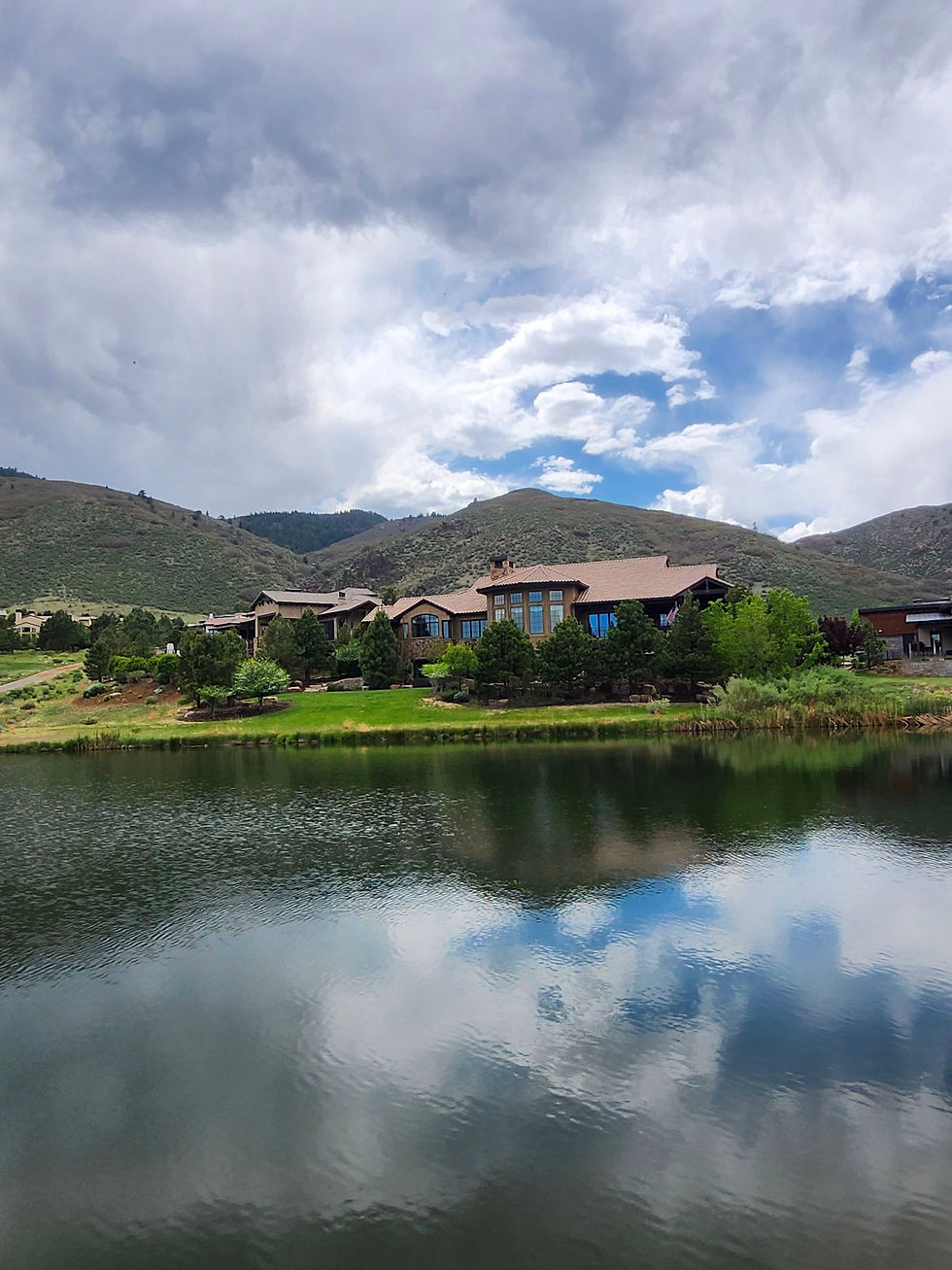
The pond is newly constructed, about three quarters of an acre, twelve feet deep in the middle, and holding more than a million gallons. It is spring fed, with a small steady inflow and a matching outflow that keeps fresh water moving through. A pond like that is a blank slate. Left alone, a nutrient rich new pond can tip toward nuisance and harmful algae in its first warm season. The owner wanted the opposite, a chemical free pond. Rather than reach for copper or peroxide once a problem appeared, she chose to establish the right biology early and keep the water safe from the start. She trained dogs and was well aware of the danger harmful algae blooms poise to canines.
Why chemical-free, and why early
Harmful algae blooms are driven by excess nitrogen and phosphorus. Chemical algaecides respond to a bloom by killing algae, which returns the dead cells and their nutrient load to the water to feed the next one. Beneficial phytoplankton works the other way. Get a strong, beneficial phytoplankton community established early and it consumes the ammonia and phosphate that blooms need, holding nutrients below the threshold where cyanobacteria can take over. For a new pond, that head start is the whole game, and it is exactly the preventative approach the owner was after.
Getting live phytoplankton to Ohio
This pond also happened to be Hydralife's first project outside Colorado, which made it a proving ground for shipping live concentrate across the country. Hydralife centrifuges the order to a compact 5 gallon bucket, packed it with an air pump and an airstone, and shipped it with instructions to aerate on arrival so the culture would land alive and ready to work, when the pond owner arrived. The order arrived healthy, fresh and ready to do its good work.

The results, season one (2025)
The pond was established in early April 2025 and supported through a spring inoculation of beneficial phytoplankton and summer with zooplankton. The clearest proof is in the difference between the water flowing in and the water in the pond. In late June, the spring feeding the pond carried measurable ammonia and nitrate. The pond itself held at zero for both. The established phytoplankton was consuming the incoming nutrients as fast as the spring delivered them.
At the June 30 reading, the inflow measured ammonia at 0.25 ppm and nitrate at 5 ppm, while the pond read zero ammonia and zero nitrate.
When I was there a few weeks ago the water was a ton clearer, and so far it appears to stay that way. No yucky stuff on the surface at all. And there are so many living things in the pond. Bugs, frogs, tadpoles, and a turtle.
Pond owner, Albany, Ohio, July 2025
A pond full of life
That last line is worth sitting with. Beneficial phytoplankton is not only a nutrient control, it is the base of the pond's food web. The single celled phytoplankton feeds the zooplankton and the zooplankton in turn feed fish and the rest of the aquatic community. When the owner described bugs, frogs, tadpoles, and a turtle, she was describing a pond that had come alive from the bottom of the food chain up. A clean pond and a productive fishery are not separate goals. The same biology delivers both.
The results, season two (2026)
For 2026 the pond was re-established with a single spring inoculation of 25 gallons of concentrated phytoplankton on April 4. A baseline the day before showed residual nutrients from the winter, including ammonia and phosphate at a level of 0.5 ppm. A follow up test more than three months later, on July 20, showed the pond reading zero across the board: zero ammonia, zero nitrite, zero nitrate, and zero phosphate. One spring inoculation developed and carried the pond clean through the heart of the growing season.
What this pond shows
Two seasons in, this pond makes a simple case. A new pond can be kept safe from harmful algae blooms without chemicals, and the same approach that keeps the water clean builds a living, productive fishery. It also shows that live concentrated phytoplankton can be shipped across the country and perform on arrival, which means a pond owner does not need to be down the road from us to get these results. The owner set out to do this the natural way, and her pond is the proof.
Building a pond, lake or reservoir the natural way?
If you own a pond, lake or reservoir and want to keep it clean, safe, and full of life without reaching for chemicals, Hydralife can help you understand whether beneficial phytoplankton is a fit. Learn more at www.hydralife.org or send us a note at service@hydralifesolutions.com


Comments