
Hydralife Results: How Ravenna Country Club Significantly Improved It's Golf Irrigation Pond Through a Full Colorado Season With Less Work and Expense

Updated: Aug 13
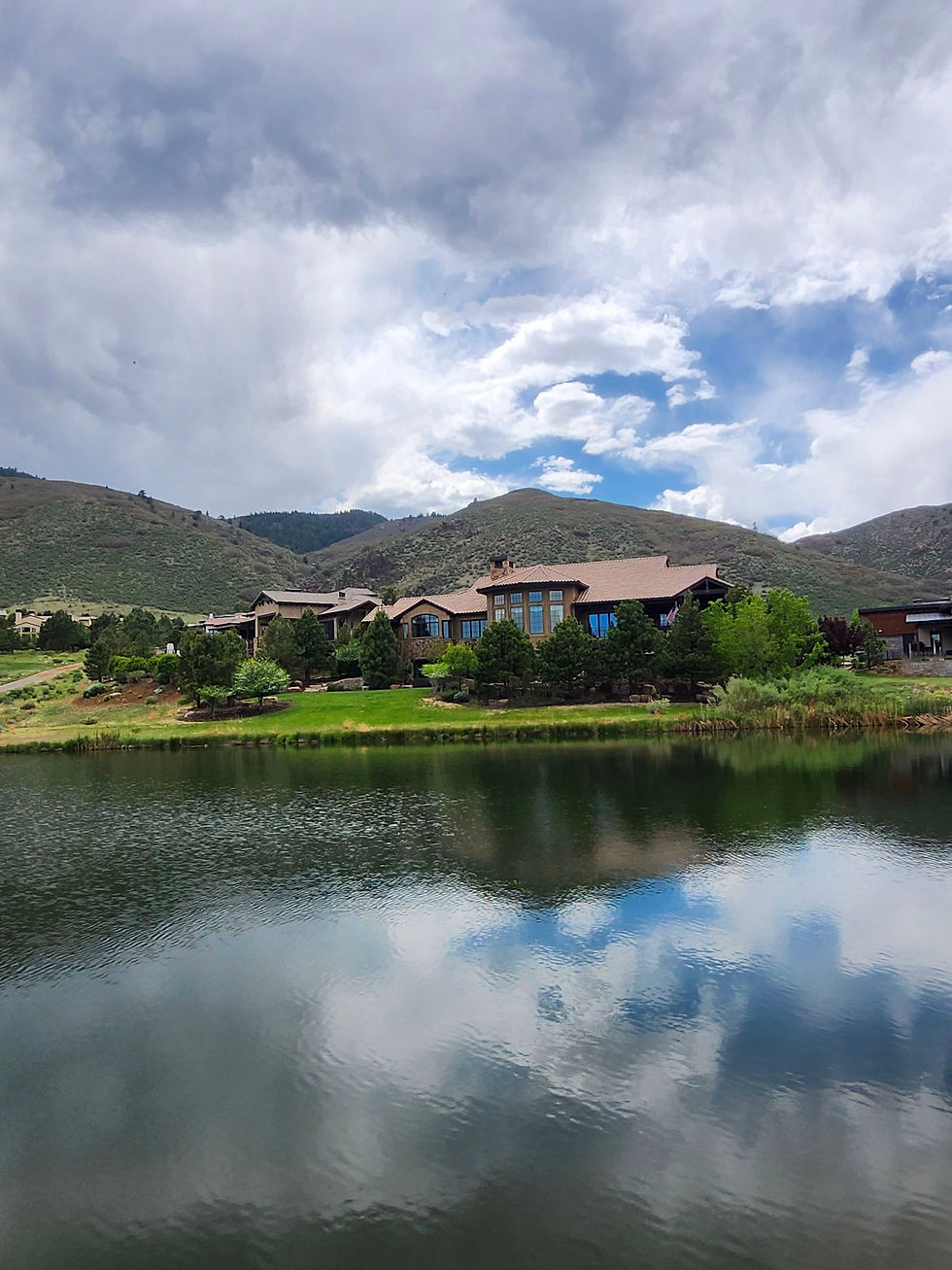
The Ravenna Country Club, https://www.ravennagolf.com/, sits against the Rocky Mountain foothills south of Denver, between Littleton and Castle Rock. It is one of the finest and beautiful private clubs in Colorado. In 2026 the club earned Platinum Clubs of America status, a distinction held by roughly the top five percent of private clubs in the country. Behind that reputation is a grounds team lead by thier Director of Grounds, Steve Datwyler, treats the property's water with the same care it gives the fairways. This is the story of Ravenna's most imprtant pond, their irrigation pond, and of their superintendent, Steve Datwyler who chose to look and manage it in a new way to improve how the irrigation pond serves the turf and further position his club to pursue the Audubon Cooperative Sanctuary Program for Golf Courses (ACSP) also known as Audubon certification.
A club known for its standards
Ravenna is a platinum rated club, and the expectation on the course is that everything looks its best, all the time. The property includes several ponds, and the one that is vital to their course is their irrigation pond. It is the water body that keeps the course green. If water quality were to slips there, it has to potential to show on the turf.
The challenge: an effluent-fed irrigation pond
The irrigation pond on Hole 6 is refilled through an irrigation ditch that carries treated effluent from two water treatment facilities in Castle Rock. That water arrives rich in nitrogen (1.0ppm) and phosphorus (.25ppm), the same nutrients that feed nuisance surface algae and cyanobacteria. For years the pond carried a history of surface algae, that an outside pond maintenance company struggled to manage. After careful consideration, the club's superintendent decided to take the pond on himself and to try a biological approach.
Why this pond was a fit
Hydralife produces live concentrated beneficial phytoplankton. Rather than treating a pond with copper or peroxide, the approach works with live organisms that provide competitive exclusion. The excess ammonia and phosphate that would otherwise fuel a harmful or ugly algae bloom become the food source for a beneficial phytoplankton community that grows quickly and depletes nutrients below bloom thresholds. That is why a high nutrient, effluent-fed pond is close to an ideal candidate for beneficial phytoplankton. When Hydralife surveyed all four of Ravenna's ponds in May, the three that tested clean were not candidates, because there was not enough nutrient load to support the phytoplankton. Hole 6, with ammonia near 1.0 ppm and measurable phosphate, was exactly the condition the phytoplankton is cultured for.
What happened over the season
Hydralife inoculated the pond in mid May but hit a cool and cloudy stretch of weather that slowed early growth. As an organization that always does the right thing, Hydralife applied a main inoculation of 100 gallons of concentrated phytoplankton in June as water temperatures rose and the sunny days fell upon Colorado. From there the superintendent and Hydralife tracked the water together on a biweekly and monthly schedule. Even as the pond irrigated and refilled at roughly 380,000 gallons a night, the results showed the method worked.
The numbers moved in one direction. Ammonia fell from about 1.0 ppm at baseline to under 0.25 ppm. Phosphate, the nutrient most closely tied to harmful blooms, dropped to a barely detectable level and held there through repeated nightly refills of nutrient rich water. Along the way the pond produced a large bloom of daphnia, a beneficial water flea that feeds fish, and the resident grass carp began spending more time along the shoreline.
A result the superintendent had not seen in six years
By mid June the superintendent reported that the irrigation pond looked healthier than at any point in his six years managing the water, and that for the first time in those six years he saw no surface filamentous algae on it. Every other pond on the property that Hydralife did not treat still carried surface nuisance algae. In July, an independent analysis by Brookside Laboratories returned ammonia, nitrate, and phosphate values at the same levels as Hydralife's own field testing, giving the results third party confirmation.
The pond that you treated looks great. No algae pressure with the heat, and in years past we would have seen some pressure by now.
Director of Agronomy and Superintendent, Ravenna Country Club, June 2026
A win for the grounds team
The club also reported cutting its pond maintenance spending by about 80 percent after moving to the biological program, along with a real reduction in labor and water management headaches. That outcome belongs to a superintendent who was willing to rethink a problem the club had managed the same way for years. Adopting a new method on a platinum rated property takes judgment and a bit of nerve, and the water speaks for the decision.
There is a second benefit worth noting for any course. Because the treated pond is the irrigation source, every watering delivers living, single celled phytoplankton, two to ten microns in size, back to the turf and soil as bioavailable organic matter. The same biology that clears the water also feeds the soil and biome. Phytoplankton is an excellent biostimulant for soils and turf both on golf courses and agriculture lands.
Considering your own irrigation pond?
Hydralife works with high nutrient ponds across United States, and effluent-fed irrigation ponds are where the approach performs best. If you manage a course, a park, a private pond, or a farm and want to understand whether beneficial phytoplankton is a fit for your water, you can reach us at www.hydralife.org. Hydralife is grateful to partner with such a productive and dedicated grounds team at Revanna Country Club. To be able to assist such a magnificent course and dedicated team is a high honor.

Comments